Transform your passion for storytelling into a career of impact. Our two-year Master of Journalism (M.J.) professional degree pairs rigorous, hands-on training with the unmatched news environment of the San Francisco Bay Area. Reporting from the crossroads of tech, culture, and power, you won't just study journalism—you'll publish high-quality stories, complete a transformative internship, and build an ambitious portfolio of work. Graduate ready to hold power into account, elevate underrepresented voices, and step into a global alum network shaping the media landscape.

Navigation Menu

Meet the Admissions Team

Director of Admissions

Nelly Provencal-Dayle (she/her)

Director of Admissions

Stay up-to-date!


We look forward to hearing from you and supporting your J-School journey with us!

Sign up for our Admissions Mailing List to stay up to date on upcoming events, application tips, and important announcements for Fall 2027 Graduate Admissions!

Connect with us at an upcoming event!

Spotlight events include:

  • Ask a J-Peer Anything: Tuesday, September 8, 4-5pm (Pacific Time) - Register here!
  • September Open House: Monday, September 28 - Register here!

Dates for upcoming Berkeley Journalism Fall Open Houses (September–November) and "Ask a J-Peer Anything" sessions are now available!


Meet our Current Students (J-Peers) in the Admisions Office

Admissions J-Peer

Natalie Villanueva (she/her)

Natalie Villanueva circle photo
  • Hometown: Patterson, CA
  • Track: Narrative Writing
  • Topical Areas of Reporting: investigative, sports
  • Ask Me Anything About: the Investigative Reporting Program (IRP), financial resources, mentorship opportunities at Cal

Admissions J-Peer

Hyeyoon Cho (she/her)

Hyeyoon Profile photo
  • Hometown: Seoul, South Korea
  • Track: Multimedia, Narrative Writing
  • Topical Areas of Reporting: business, climate, health, investigative
  • Ask Me Anything About: the Investigative Reporting Program (IRP), summer internship, unique UC Berkeley opportunities

Key Dates & Deadlines

Application Deadlines

We encourage you to submit your application by the priority deadline of December 1st:

  • Master of Journalism (MJ):
    • Round 1 (Priority ) Deadline: December 1, 2026 at 8:59pm PT
    • Round 2 Deadline: January 14, 2027 at 8:59pm PT
  • Concurrent Degrees with MJ:
    • Singular Application Deadline: December 1, 2026 at 8:59pm PT
    • Includes both degree programs: Journalism & Public Health (MPH/MJ) and Journalism & Asian Studies (MJ/MA)

 Decisions & Enrollment Dates

  • Final Decision Notification: Early March 2027
  • Enrollment Confirmation: April 15, 2027


Program Start Date

  • Start of Fall 2027 Semester: August 18, 2027
  • First Day of Instruction: August 25, 2027

Download the Fall 2027 Academic Calendar (PDF) to learn more.

Program Overview

Program Length

Duration: 2 Academic Years (4 Semesters, Full-Time)
Credit Requirement: 36 units (24+ within Berkeley Journalism)

Areas of Study

Here, you’ll select a core media platform as your track—Audio Reporting, Documentary, Multimedia-Web Video, Narrative Writing, or Photojournalism! Sharpen your skills, deepen your storytelling expertise, and stand out in the field.

Topical Areas

During your studies, you'll also have the chance to explore topical areas of reporting through tailored coursework in areas such as: Climate, BusinessData, Health & Science, Investigative Reporting, International Reporting, and Reporting on Incarceration!

Master's Project (Capstone)

This is an original work of reporting in your chosen media platform, completed in the second year under the close guidance of a faculty advisor, designed to contribute to a portfolio of ambitious, high-quality, publishable work.

M.J. Degree

You will earn a Master of Journalism (M.J.) degree. Unlike an M.A., the M.J. emphasizes hands-on reporting, multimedia storytelling, and practical training designed to prepare you to enter the workforce directly as a journalist or media professional.

Concurrent Degrees

We also offer joint degrees with the School of Public Health (MPH/MJ) and Asian Studies (MJ/MA), where students can earn two master's degrees in just three years.

Summer Internship

As a core degree requirement, you’ll complete a 300-hour summer internship between your first and second year. We don't just send you out into the world—we help you land internships at some of the industry's most influential outlets.

Our students intern at major national and regional powerhouses, including: The New York Times, Los Angeles Times, NPR, Bloomberg, CalMatters, Inside Climate News, hyper-local innovators like Berkeleyside and the Bay Area News Group, and even our own acclaimed Investigative Reporting Program (IRP).

M.J. Curriculum Overview

Degree at a Glance: The Master of Journalism (M.J.) is a full-time, four-semester program requiring 36 units (minimum 24 within the School of Journalism), a 300-hour summer internship, and a capstone Master’s Project.

Our two-year M.J. degree pairs rigorous academics with real-world practice. Guided by active and award-winning journalists in small, mentor-led classes, you’ll report local news, features, and multimedia investigations from day one. Customize your path across specialized topical areas—including business, data, climate, international, and investigative reporting—and master at least one chosen media platform in Audio, Documentary, Multimedia, Narrative Writing, or Photojournalism.

You'll graduate fully prepared to launch or advance your career. Our program combines hands-on field experience with personalized support to ensure you stand out:

  • 300-Hour Supervised Internship: Gain direct experience between your first and second year. You will receive one-on-one guidance from Betsy Rate, our Director of Career Development Director, to land placements at top-tier newsrooms.
  • Professional Portfolio & Resume: Graduate with a robust collection of published clips and a targeted, high-impact resume ready for hiring managers.
  • Exclusive Post-Grad Pathways: Access elite opportunities after Berkeley Journalism, from the Investigative Reporting Program (IRP) to the California Local News Fellowship, and join an active global alum network shaping the industry.
Semester / Term Core Courses Key Highlights
Year 1: Fall
(12 units)
  • J200: Reporting the News (6 units)
  • J207: Research Methods (1.5 units / 1st 7 weeks)
  • J255: Ethics (1.5 units / 2nd 7 weeks)
  • Intro Track Reporting course in your chosen media platform/track
Build and practice fundamental reporting skills and dive into your chosen media platform/track.
Year 1: Spring
  • Media Law (1.5 units / 7 weeks)
  • Advanced Reporting course in your chosen media platform/track
  • Electives in other media platforms and topical areas of reporting
Deepen track knowledge and publish clips to build your portfolio.
Summer
  • Reporting Internship to be completed between the first and second year of study
Fulfill the 300 supervised internship hours graduation requirement.
Year 2: Fall
  • Advanced Reporting course in your chosen media platform/track
  • Electives
Tailor your curriculum in close consultation with your advisor.
Year 2: Spring
  • Master's Project (Capstone)
  • Final Electives
Complete and present your final project in Berkeley Journalism's annual Showcase.

*Please note: Course schedules vary by chosen track and electives after the standardized first semester. Concurrent-degree students should check with the Graduate Student Affairs Officer (GSAO) to confirm their specific degree requirements upon enrollment.

Student Work & Testimonials

Audio-Hero-scaled

Audio

Two students in winter clothes on an ATM with two sitting beside them.

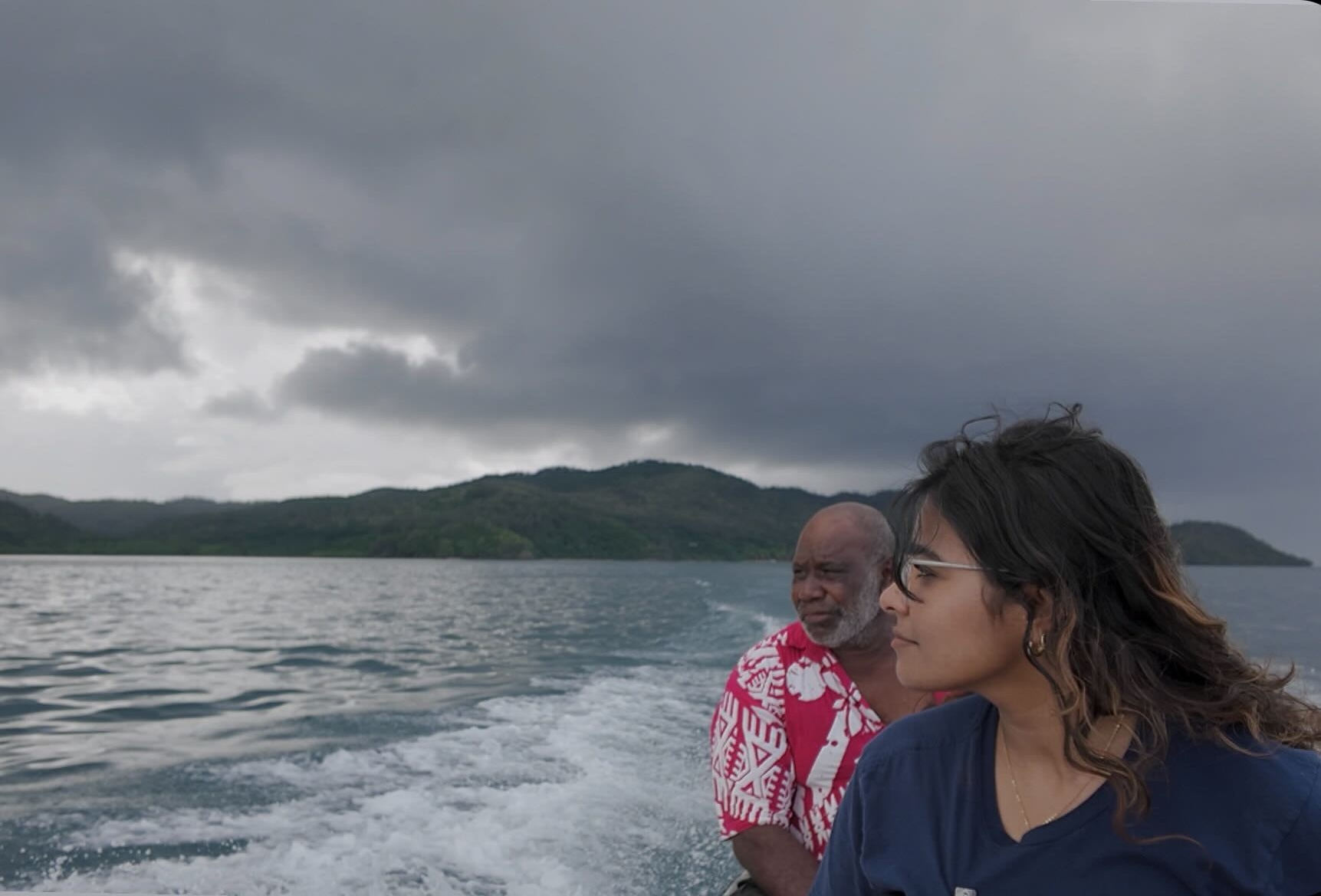
Documentary

A woman with dark hair pulled back wearing glasses on a boat with a man in profile with islands in the backgroud.

Multimedia

UCB_Election2024

Narrative Writing

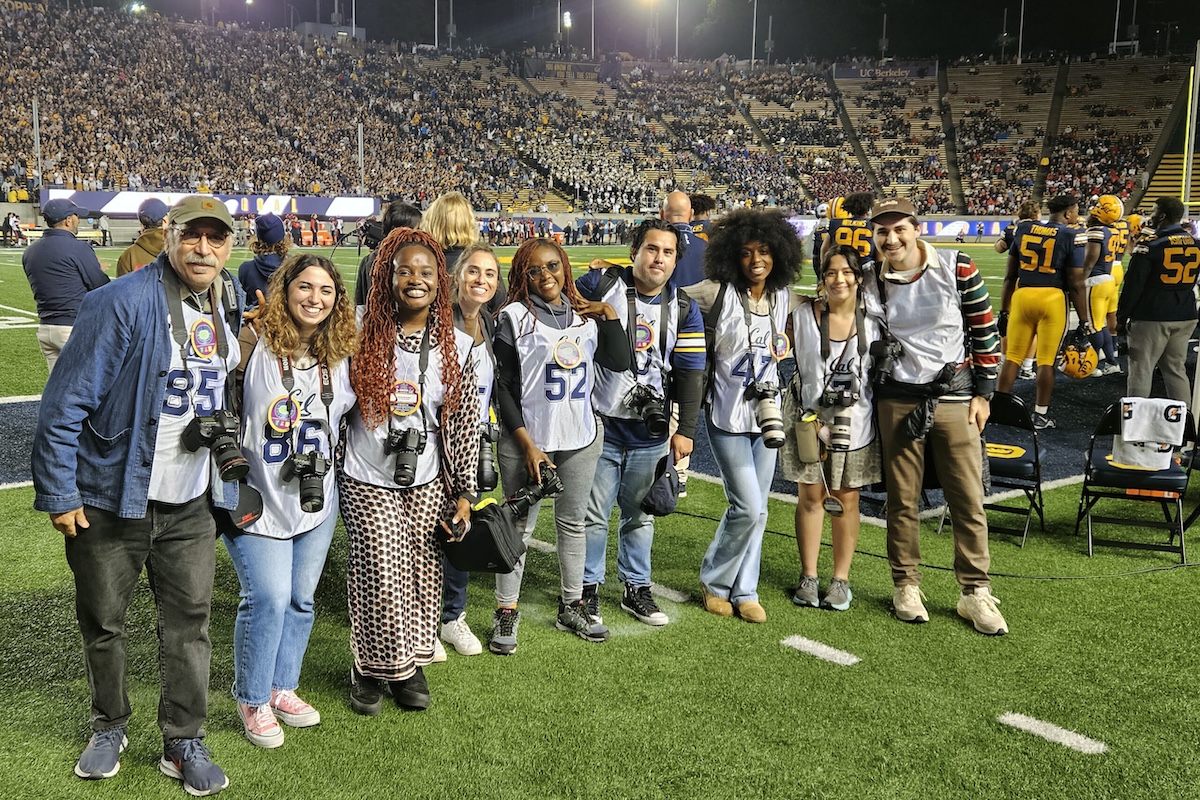
2024-J213-Cal-Game-scaled

Photojournalism

Explore the work of our students and alums—published in outlets like The New York Times, Los Angeles Times, San Francisco Chronicle, Washington Post, NPR, KQED, Reveal, and more. You’ll also find groundbreaking projects on our Investigative Reporting Program (IRP) page, and innovative series like the Stakes Explained, a podcast and video project launched in response to the flood of new policies under the current administration. You can explore more highlights on our incredible alums on our Berkeley Journalism website.

Why Choose Berkeley Journalism

Students, faculty, and alums share what the program has meant to them and why this work matters now. Get an inside look at studying journalism and reporting at UC Berkeley.

youtube-video-thumbnail

What sets Berkeley Journalism apart isn't just how we teach the craft—it's who we are together.

We stand firmly by our UC Berkeley community principles, fostering a deeply unified and collaborative community where students, faculty, and alums support one another to shape the future of journalism. Grounded in truth, public service, and mutual support, our culture proves that high-stakes reporting and a compassionate, inclusive community belong together.

Graduate ready to break stories, lead rigorous investigations, and launch a high-impact career. Our industry-leading two-year program pairs hands-on craft training with intellectual depth—guided by award-winning, practicing faculty & lecturers, rooted in honesty and integrity, and energized by a deeply connected professional network. With direct access to the San Francisco Bay Area’s global media hub, you’ll gain the skills and solidarity needed to remake the media landscape.

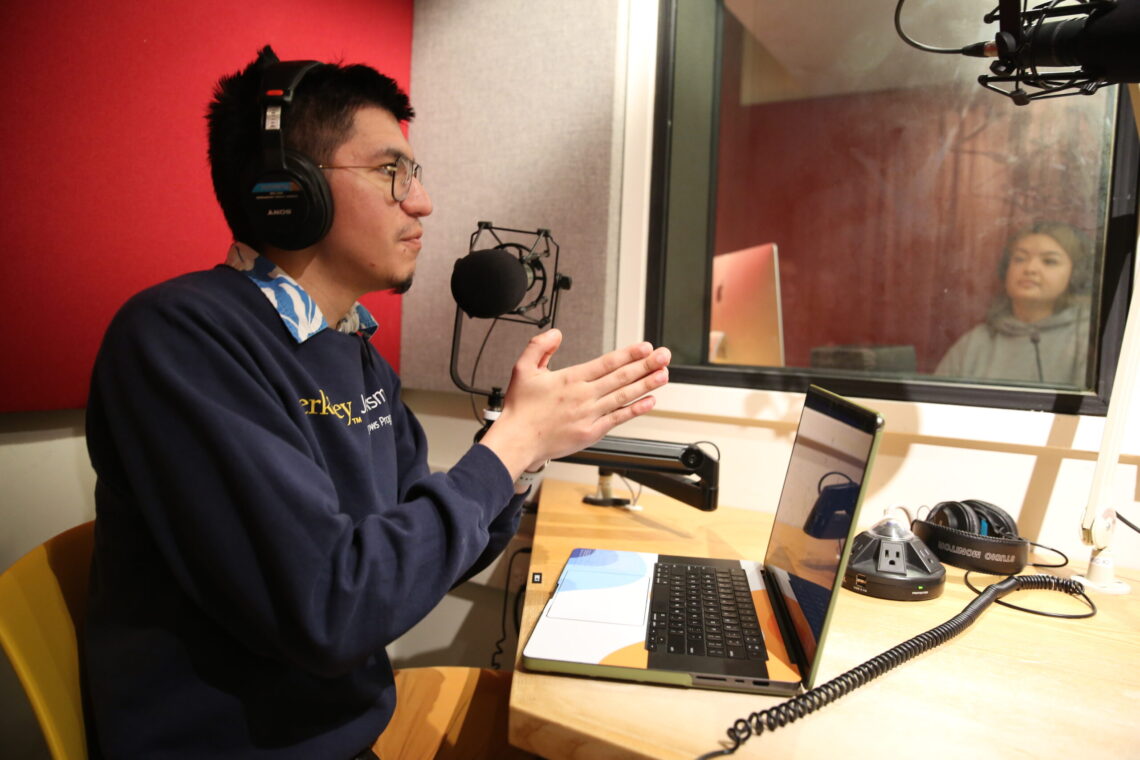
Along the way, you’ll have access to standout opportunities: Berkeley Journalism’s flagship radio show and podcast (North Gate Radio), the Business Journalism Certificate (in partnership with Berkeley Haas and supported by Bloomberg Philanthropies), International Reporting travel classes in places like China, India, and Latin America (most recently, Mexico City in 2026, Bogotá in 2025, and Mumbai in 2024), the Climate Journalism Lab, our acclaimed Investigative Reporting Program whose goal is to change the face of who gets to do investigative reporting, and the opportunity to be part of the California Local News Fellowship post-graduation.

Learn more about what makes Berkeley Journalism stand out as a leading J-School by following our latest news.

Top Reasons to Join Berkeley Journalism

Learn More

Driven by our UC Berkeley Community Principles & Purpose

Guided by UC Berkeley’s Principles of Community, we foster respect, belonging, and ethical reporting. We empower you to produce fearless journalism that serves diverse communities.

Our values shape every story we tell and every room we enter:

  • Unified Community & Just Culture: We build a culture of collaboration, respect, and mutual support. We stand firmly as a just community—rejecting discrimination and hate, and recognizing that diverse perspectives make us stronger.

  • Mission Impact & Free Speech: We train journalists to tackle pressing global and local issues. Through rigorous dialogue, open expression, and ethical reporting, our work advances the public good.

  • Excellence in Diversity & Equitable Access: Journalism must reflect the world it covers. From our Investigative Reporting Program (IRP) to the California Local News Fellowship, we strive to break down barriers and create clear pathways for the next generation of journalists.

Learn More

Find your community in a close-knit, collaborative cohort

Learn in a collaborative environment where your voice genuinely matters. With just 50–60 students per cohort, you get the intimacy of a tight-knit community.

Even further, with an average class size of 12 or less students, you'll never be just a number. You’ll receive direct mentorship from world-class faculty and lecturers actively shaping the field, alongside tailored career guidance—from individual portfolio reviews to targeted industry networking. It’s the personal attention of a small professional J-School, backed by the unmatched resources of a top-tier university.

Learn More

Professional M.J. program offering hands-on, specialized training

Turn theory into practice in UC Berkeley’s Master of Journalism program. Over two years including a summer internship between your first and second year of study, you’ll produce local news using advanced multimedia tools, refine your expertise in at least one specialized area of study below, and graduate with an ambitious professional portfolio.

Areas of study (tracks) include:

  • Audio Reporting
  • Documentary
  • Multimedia/Web Video
  • Narrative Writing
  • Photojournalism

Learn More

Two-year format, giving you the time you need

We’re one of the only programs in the country offering a comprehensive two-year format, which gives you something incredibly rare in today's fast-paced media world: the luxury of time. Time to take risks, iterate, and truly master your craft.

Learn More

The Berkeley Advantage as the #1 public university

As a graduate of the #1 public university in the nation and global powerhouse, our reputation becomes your reputation. At UC Berkeley Journalism, you join a world-renowned community of courageous, dedicated, versatile storytellers—including Pulitzer and Emmy award-winning alums who actively shape today's media landscape.

Our graduates don't just enter the industry; they lead it. You will find Berkeley alums driving innovation as investigative reporters, data journalists, editors, and podcast or documentary producers at top global outlets like The New York Times, The Associated Press, NPR, and Bloomberg News. Beyond traditional newsrooms, our network thrives in nonprofit, policy, and entrepreneurial spaces worldwide, utilizing their skills to lead public discourse and create new pathways.

When you study at Berkeley Journalism, you aren't just gaining a world-class education—you are tapping into a powerful, connected global network ready to mentor, hire, and champion your work.

Learn More

Prime location with California's Bay Area as your newsroom

Located in the San Francisco Bay Area, Berkeley places you at the heart of California’s storytelling hub. You’ll cover major regional and national stories while embedding in a thriving media ecosystem that includes KQED, CalMatters, POLITICO California, Mother Jones, Mission Local, and the San Francisco Chronicle. Plus, major national outlets like The New York Times, The Washington Post, and Bloomberg maintain West Coast bureaus here, giving you direct access to the center of tech, climate, and policy reporting.

Berkeley isn’t just a journalism school—
it’s a launchpad for courageous, impactful reporting!

Just the facts

69%

of domestic incoming students are California residents

30%

of incoming students are international students

35%

of incoming students are first-generation college students

67%

of incoming students are students of color

Who We’re Looking For

Are you courageous, curious, and driven—
ready to make an impact through powerful storytelling?

Basic Qualifications

To be eligible for admission to the Master of Journalism (MJ) program, applicants must meet the following baseline requirements:

  • Bachelor’s Degree: Applicants must hold, or expect to hold, a bachelor’s degree from an accredited institution by the time of enrollment at UC Berkeley.

  • Academic Record: A minimum cumulative GPA of 3.0 (B) is generally expected. However, we encourage all interested candidates to apply—each application is reviewed holistically, taking into account your full background, experiences, and overall potential to thrive in the program.

  • No Prior Journalism Experience Required: Our students come from diverse academic and professional backgrounds—ranging from career changers and newcomers to journalism to seasoned reporters looking to elevate their work. You do not need a degree in journalism or prior professional media experience to apply.

What We Look For: Above all, we value a demonstrated commitment to impactful storytelling, a dedication to personal and professional growth, and a readiness to actively contribute to the future of journalism.

Standardized Testing

  • Graduate Record Examination (GRE): No GRE Required.
    We do not require the GRE, ensuring our application process remains accessible to all applicants.
  • English Language Proficiency Test (TOEFL or IELTS): Dependent on the location of your completed bachelor's degree institution.
    Applicants must submit official proof of English language proficiency unless they have earned a bachelor’s degree from an accredited institution in a country where the official language is English. For additional details on exemptions and instructions, please visit the Berkeley Graduate Admissions website.

There are two standardized tests we accept: the Test of English as a Foreign Language (TOEFL), and the International English Language Testing System (IELTS). Graduate Admissions requires that applicants meet certain minimum cumulative and section scores as listed on the Berkeley Graduate Admissions websiteHowever, we strongly recommend submitting higher scores to strengthen your overall application.

How to Apply

Ready to begin your journey with us?  Start your online application, which launches shortly on September 24, 2026 for Fall 2027 Graduate Admission!

We strongly encourage you to submit your application by the Round 1 (Priority) deadline of December 1, 2026 to maximize your eligibility for both admission and departmental funding.

For step-by-step guidance, please review the detailed instructions in this section, as well as the Application Requirements(opens in new tab) and Admissions FAQs on the UC Berkeley Graduate Division website.

We recommend submitting early! That way, our team has plenty of time to review your file for completeness, and you'll still be able to email us any missing or updated materials before the deadline. We look forward to reviewing your application!

Application Components

Additional Requirements

Concurrent Degree, Documentary, International & Re-Applicants

Review the guidance below to ensure your application is complete and ready for consideration.

Requesting an Application Fee Waiver

We understand that application fees can pose a barrier, and aim to support applicants for whom this cost presents a hardship.

We recommend first checking the "Application Fee & Waivers" tab in this "How to Apply" section for more information on your eligibility, options, and next steps. You can also email us at admissions@journalism.berkeley.edu.

Important Policy on AI Use: To maintain the integrity and fairness central to journalism, applicants must submit their own original work rather than using generative AI tools to compose or rewrite application materials. If AI is used in a limited capacity for initial brainstorming or basic proofreading, you must explicitly disclose how and where it was utilized.

Funding Your Graduate Education

Making a World-Class Education Accessible!

We believe financial barriers should never stand in the way of truth-telling, diverse perspectives, and impactful journalism. Around 90% of UC Berkeley graduate students receive financial aid. All admitted Master of Journalism applicants are automatically considered for departmental funding, including merit-based scholarships and fellowships. Funding notifications—which may combine merit- and need-based support based on your submitted application—are sent shortly after admissions decisions.

At Berkeley Journalism, we aspire to make world-class journalism accessible to every storyteller. Explore our funding opportunities below to help chart your path forward!

Merit-Based Funding Departmental Funding

All admitted students are automatically considered for merit-based funding during our holistic admissions review. To maximize your funding opportunities, we recommend applying by the Round 1 (priority) deadline to receive priority consideration for merit-based departmental funding and the chance to apply for special fellowships like the Litke in International Reporting, 11th Hour Food & Farming, and Dean’s Fellowship (just to name a few). Please note that the exact list of available scholarships changes each year.

You can learn more about these special opportunities and locate more resources on our Costs & Funding page.

Need-Based Funding Departmental Funding

Need-based departmental funding is separate from federal financial aid, which is processed by the UC Berkeley Financial Aid & Scholarships Office. To be considered for need-based departmental funding, please complete the following:

  1. Submit the FAFSA: Complete the Free Application for Federal Student Aid (FAFSA).
    (*Note: This is required for domestic students only. International students are ineligible for federal financial aid and do not need to submit a FAFSA.)

  2. Complete the "Departmental Grant" Section: Complete this section along with the essay in the Departmental Grant section of your online application. The information allows us to better understand your financial circumstances relative to other applicants.

Federal Student Financial Aid

Domestic students are also eligible for financial aid, with eligible graduate students being awarded federal student loans, work-study, or a combination of the two, making a world-class education more accessible. 

In order to be considered for all possible financial aid, which can help cover tuition, fees, and living expenses, you must complete the Free Application for Federal Student Aid (FAFSA) or if undocumented, the California Dream Act Application (CADAA). UC Berkeley’s priority deadline is March 2nd. However, for application purposes, we recommend submitting FAFSA as early as possible.

Please check with the Financial Aid and Scholarships Office(opens in new tab) as they continue to provide updates and resources.

For more details on tuition & fees, and funding options—including federal grants, loans, departmental scholarships, and more comprehensive funding packages through university-wide opportunities like Academic Student Employment (ASE), or the Mastercard Foundation Scholars Program, please review Berkeley Journalism’s Costs & Funding page. Please note that the tuition & fees listed on the Registrar's page are per semester. The MJ program is a two-year (four-semester) program.

Connect with Us

Explore Berkeley Journalism your way, whether virtually or in person at our J-School, located at 121 North Gate Hall in Berkeley, California.

We are offering an array of select live virtual events throughout the fall including "Drop-In Admissions Office Hours" led by the Director of Admissions, and "Ask a J-Peer Anything!" sessions led by current second-year students. Please note, virtual events are not recorded, so please be sure to join us live to make the most of connecting with our team!

Upcoming Admissions Events


Date Event Type Location
Tuesday,
September 8
4:00pm-5:00pm PT
Admissions J-Peers | Ask a J-Peer Anything! Online Register here!
Friday,
September 18
12:00pm-1:00pm PT
Admissions J-Peers | Ask a J-Peer Anything! Online Register here!
Thursday,
September 24
12:00pm-1:00pm PT
Admissions | Application Launch: MJ Program Overview & Round 1 Funding Opportunities Online Register here!
Monday,
September 28
12:00pm-1:30pm PT
Admissions | September Fall Open House In Person Register here!
Thursday,
October 8
10:00am-11:00am PT
UC Berkeley | Graduate Diversity Admissions Fair: MJ Info Session Online Register here!
Friday,
October 9
4:00pm-5:00pm PT
Admissions | MPH/MJ Concurrent Degree Info Session Online Register here!
Tuesday,
October 20
12:00pm-1:30pm PT
Admissions | October Fall Open House In Person Register here!


Fall Open Houses & Campus Visits

We can’t wait to welcome you to campus! To help us make the most of your time with us, please share your details by completing this Campus Visit Interest form as early as possible before your trip.

We highly recommend planning your visit around one of our Fall Open House dates (September through November) if you can, to maximize your visit. We look forward to welcoming you here!

Sit in on a class

Explore our Fall 2026 Course Schedule to learn more about our exciting array of courses.

Connect with a J-Peer

Speak with a current second-year Master of Journalism student who works in the UC Berkeley Journalism Admissions Office.

Join our Fall Open House!

Fall Open House dates are here! Join us for a Fall Open House (Sept–Nov) to visit campus, meet our community, and experience Berkeley Journalism firsthand.

Fall Open House Dates Register here!

  • September Open House: Monday, September 28
  • October Open House: Tuesday, October 20
  • November Open House: Tuesday, November 17

Open House Agenda

  • 9:00 AM – 12:00 PM and/or 2:00 PM – 5:00 PM | Class Visits: Sit in on live courses to experience student life firsthand.
  • 12:00 PM – 1:00 PM | Insider Q&A: Admissions & Student Experience: Ask questions about applying and student life with the Director of Admissions and current students.
  • 1:00 PM – 1:30 PM | J-School Tour: Tour historic North Gate Hall with a current student, including the Radio Lab, Production Hub, and Investigative Reporting Program newsroom.

Take a University-wide tour

  • Sign up for a UC Berkeley Campus Tour (offered 9:30-11:00am or 12:30-2:00pm on most days) or do your own Self-Guided Tour. Be sure to book through Berkeley Visitor Services well in advance as spots fill up quickly!
  • Plan your tour of the Campanile (the second-tallest freestanding clock and bell tower in the world) to get a spectacular, sprawling view of the Bay Area.
  • Join a Virtual Campus Tour which also covers the Campanile.

View Previous Sessions

For additional recordings, please visit the Berkeley Journalism YouTube Channel. You can also explore the Graduate Admissions Webinar Series (also via YouTube), covering topics such as navigating the graduate school application, re-entering academia, and student life in California.

In addition to YouTube, you are always welcome to follow Berkeley Journalism on Instagram, LinkedIn, Twitter (X), or Like us on Facebook, whatever your social media preference. We hope you'll continue to stay connected!

Thank You For Visiting

Director of Admissions

Director of Admissions

Nelly Provencal-Dayle